Pauline At The Beach Internet Archive Top ★ Newest

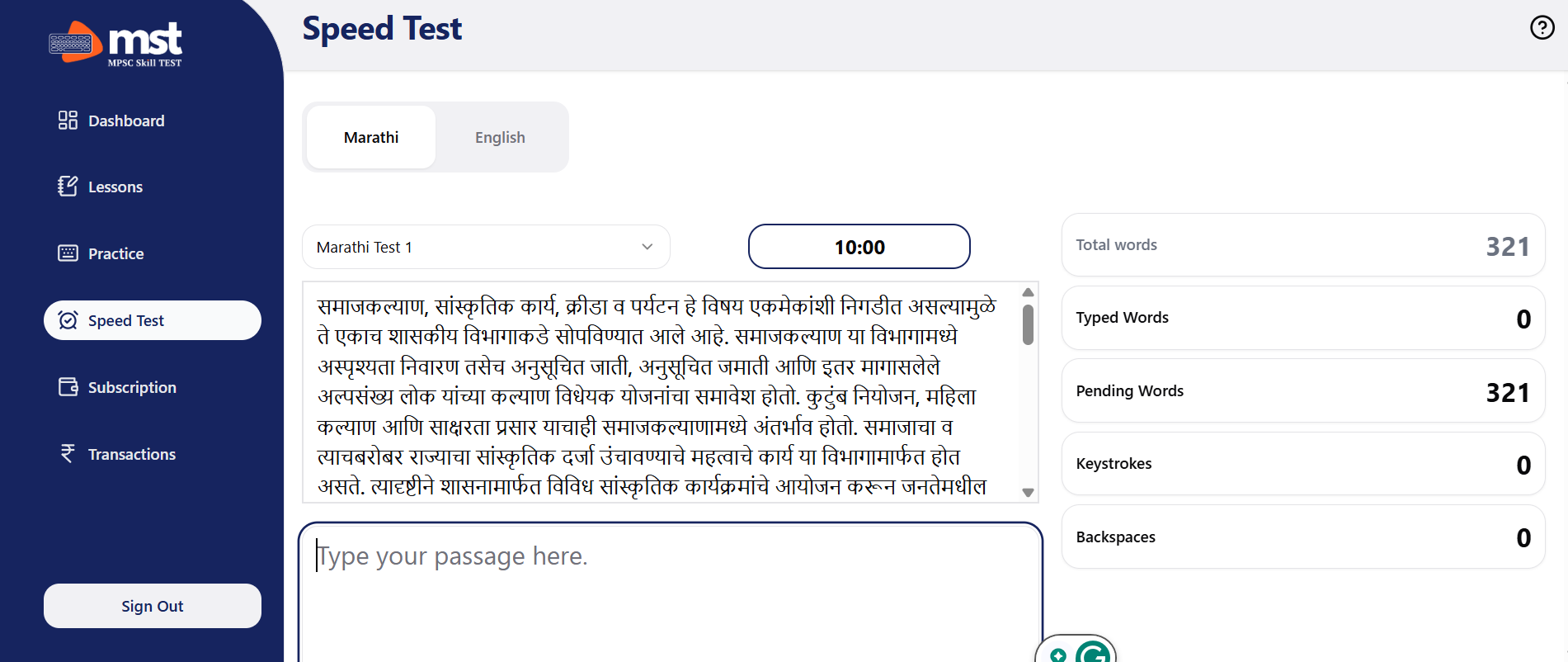
Prepare for the official test. Choose your language to begin your practice session.

100+

Marathi & English Practice Passages

100+

Marathi & English Lessons

Official

Exam Interface

Dashboard UI

Everything You Need to Succeed

From guided lessons to detailed analytics, our platform is built to make you a typing expert.

Marathi and English Typing Lessons

Extensive Lesson Library

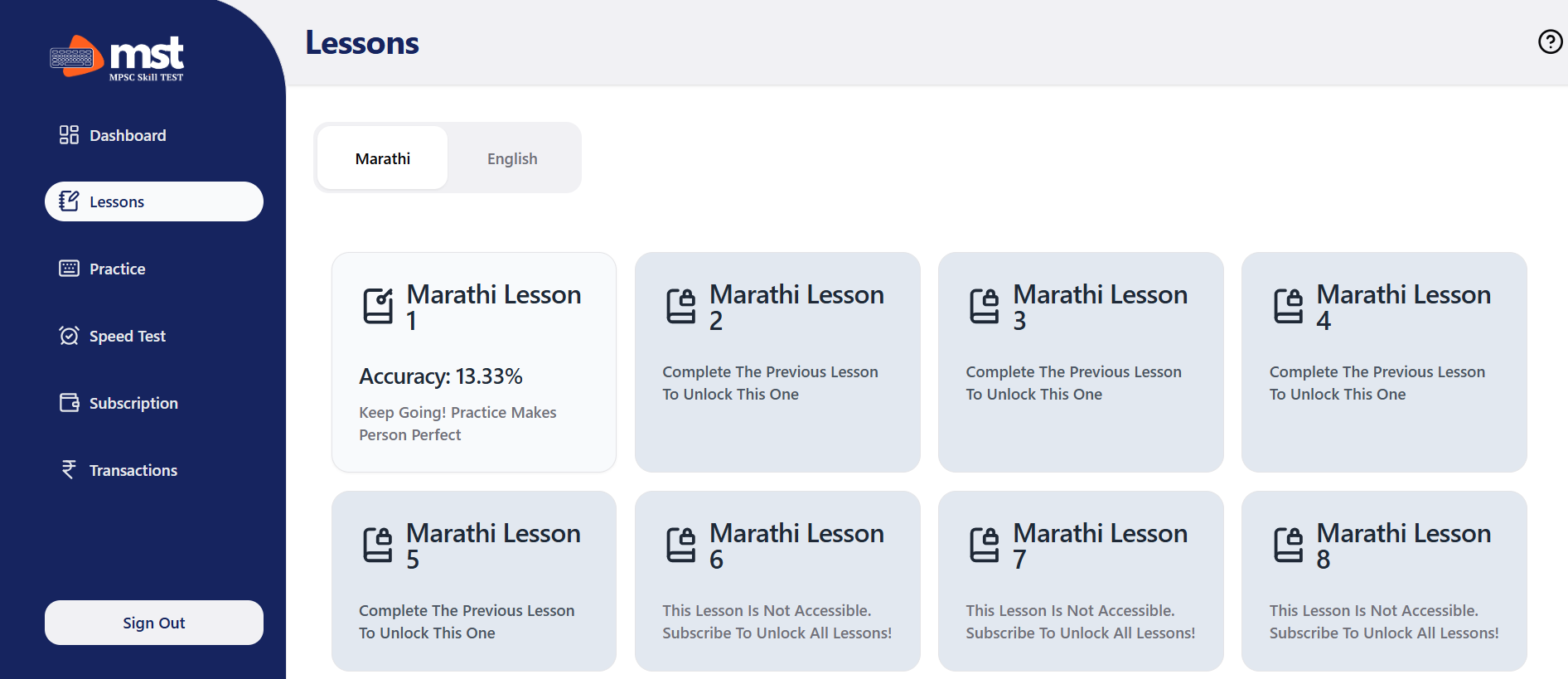
Master the keyboard with over 100+ carefully crafted lessons available in both Marathi and English. Our curriculum is designed to guide you from basic keystrokes to complex paragraphs, ensuring steady improvement at every stage.

Accuracy and Progress Tracking

Track Your Performance

Monitor your journey to becoming a typing pro with our advanced analytics tools. Visual data helps you pinpoint areas for improvement and celebrate your progress.

  • Accuracy Graphs: Visualize your accuracy percentage versus errors over time.
  • Progress Tracker: Get detailed reports on your WPM, keystrokes, and backspaces for every test.
  • Practice & Speed Tests: Choose between untimed practice sessions or exam-condition speed tests.

Pauline at the Beach

(1983), directed by Éric Rohmer, is the third film in his "Comedies and Proverbs" series. It is available on the Internet Archive as part of various digital film collections. Core Themes and Plot

The film opens with a 12th-century proverb: "He who talks too much, undoes himself" . This serves as the central irony of the film, as the adult characters constantly intellectualize their desires and moral positions, only to promptly contradict them through their actions.

Rohmer’s genius lies in his visual restraint. He uses the beach not as a backdrop for hedonism, but as a theater of alienation. The wind whips the hair; the sand gets in the shoes; the sun bleaches the colors until the characters look like specimens under a microscope.

: Many essays note the film’s circular structure—it begins with arrival and ends with departure, suggesting the characters return to where they started, perhaps having learned very little from their "traps". Direct Access to the Film & Scripts Internet Archive - Pauline à la plage (1983)

Introduction

: While the adults (Marion, Henri, and Pierre) entangle themselves in a web of lies and self-deception, 15-year-old Pauline remains the most perceptive and wise character, watching their "philosophical parlor games" from the outside. Naturalistic Visual Style

At first glance, this seems odd. The Archive is not Netflix or Criterion Channel. It’s a refuge for the obsolete and the out-of-copyright, a place of historical preservation, not algorithmic promotion. Yet Pauline consistently ranks among the most-watched feature films on the platform. Why?

Pauline At The Beach Internet Archive Top ★ Newest

Pauline at the Beach

(1983), directed by Éric Rohmer, is the third film in his "Comedies and Proverbs" series. It is available on the Internet Archive as part of various digital film collections. Core Themes and Plot

The film opens with a 12th-century proverb: "He who talks too much, undoes himself" . This serves as the central irony of the film, as the adult characters constantly intellectualize their desires and moral positions, only to promptly contradict them through their actions. pauline at the beach internet archive top

Rohmer’s genius lies in his visual restraint. He uses the beach not as a backdrop for hedonism, but as a theater of alienation. The wind whips the hair; the sand gets in the shoes; the sun bleaches the colors until the characters look like specimens under a microscope. Pauline at the Beach (1983), directed by Éric

: Many essays note the film’s circular structure—it begins with arrival and ends with departure, suggesting the characters return to where they started, perhaps having learned very little from their "traps". Direct Access to the Film & Scripts Internet Archive - Pauline à la plage (1983) This serves as the central irony of the

Introduction

: While the adults (Marion, Henri, and Pierre) entangle themselves in a web of lies and self-deception, 15-year-old Pauline remains the most perceptive and wise character, watching their "philosophical parlor games" from the outside. Naturalistic Visual Style

At first glance, this seems odd. The Archive is not Netflix or Criterion Channel. It’s a refuge for the obsolete and the out-of-copyright, a place of historical preservation, not algorithmic promotion. Yet Pauline consistently ranks among the most-watched feature films on the platform. Why?